1. Emergency Preparedness Starts Before the Emergency
Most dental laboratory work is routine. Cases arrive, prescriptions are checked, designs are produced, appliances are manufactured and completed work leaves the laboratory. Because the work is familiar, it can be easy to assume that emergencies are something that happen somewhere else.
They are not. A person can collapse in a laboratory, a technician can suffer a serious burn, a chemical can enter an eye, or a piece of equipment can cause an unexpected injury. The fact that a laboratory is not primarily a clinical treatment environment does not remove the need for sensible emergency planning.
The GDC states that all registrants must be trained in dealing with medical emergencies, including resuscitation, and must have up-to-date evidence of capability. The GDC also makes clear that a registrant must understand their role in an emergency and be sufficiently trained and competent to carry it out.
That role will depend on the environment. A clinical dental technician working directly with patients has different emergency considerations from a technician working entirely within a commercial laboratory. A laboratory may also have non-dental staff, visitors, delivery drivers, students or contractors on site.
Emergency preparedness is therefore less about memorising a large list of medical conditions and more about answering some straightforward questions before anything happens:
• Who calls 999?
• Where is the first-aid equipment?
• Where is the nearest AED?
• Who knows how to use it?
• What should happen if someone is exposed to a chemical?
• How is the incident reported?
• Who is responsible for contacting emergency services, management or the responsible person?
If the answers depend on somebody remembering what to do in the moment, the laboratory is relying on luck rather than preparation.
2. When Someone Becomes Unwell: Recognising a Medical Emergency
A medical emergency does not necessarily begin dramatically. Someone may initially complain of feeling dizzy, short of breath, confused, weak or unwell before their condition deteriorates.
In a laboratory environment, the first useful response is often surprisingly simple: stop the activity, make the area safe, assess the person and decide whether emergency help is required.
If someone is unresponsive, the current Resuscitation Council UK guidance advises calling 999 as soon as possible. If the person is unresponsive with abnormal breathing, cardiac arrest should be assumed and chest compressions should begin as soon as possible.
For adult basic life support, the 2025 Resuscitation Council UK guidance recommends chest compressions at a rate of 100–120 per minute and a depth of at least 5 cm but not more than 6 cm. If rescue breaths are being provided, the standard sequence remains 30 compressions followed by 2 breaths. If a rescuer is unable or unwilling to provide rescue breaths, compression-only CPR is appropriate while following the instructions of the emergency call handler.
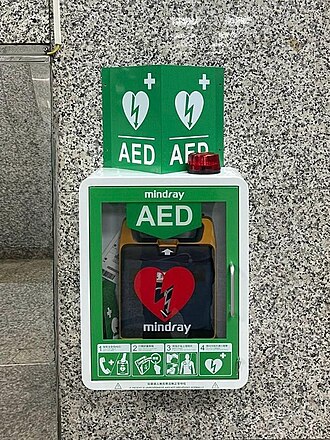
An AED should be used as soon as one is available. AEDs are designed to analyse the rhythm and provide instructions to the rescuer. You do not need to make your own decision about whether a shock is required.
The important point for a technician is not to become distracted by trying to establish exactly what medical condition caused the collapse. In an emergency, the priority is recognising the situation, summoning appropriate help and beginning basic life support when required.
3. Common Emergencies: Recognise, Protect and Get Help
Not every emergency in the laboratory will involve cardiac arrest. A colleague or visitor may experience a faint, an asthma attack, hypoglycaemia, an allergic reaction or a seizure.
The technician does not need to become an emergency physician. What matters is recognising that something is wrong and knowing when to obtain urgent assistance.
A person experiencing a seizure should be protected from nearby hazards. Move objects that could cause injury where this can be done safely, but do not attempt to restrain the person or place anything in their mouth. Once the seizure has stopped, the person should be monitored and appropriate medical assistance obtained according to the circumstances.
A person with suspected hypoglycaemia who is conscious and able to swallow may require fast-acting carbohydrate. However, food or drink should never be given to someone who is unconscious or unable to swallow safely.
Anaphylaxis is a particularly important emergency to recognise because deterioration can be rapid. Features may include problems with the airway, breathing or circulation, with or without skin or mucosal changes. Where an individual has their own prescribed adrenaline auto-injector and is able to use it, or where someone trained and authorised to administer it is present, the emergency response should follow the relevant local procedure. 999 should be called for suspected anaphylaxis.
The key principle is consistent across these situations: recognise the emergency, remove immediate hazards where possible, call for appropriate help and work within your training and competence.
4. Burns, Chemicals and Eye Injuries at the Bench
Dental laboratories contain hazards that are less common in many clinical environments. Heat, chemicals, compressed gases, rotary equipment, sharp instruments and dust-producing processes all create the possibility of injury.
The correct response to an exposure depends on the substance and the circumstances. This is why the laboratory’s COSHH assessments, safety data sheets and local emergency procedures matter. A generic first-aid response is not appropriate for every chemical.
Eye exposure deserves particular attention. If a chemical or other hazardous substance enters the eye, immediate irrigation may be required. The laboratory should have suitable arrangements for emergency eye irrigation where the risk assessment identifies this as necessary. The substance involved should be identified and the relevant safety information provided to medical personnel.
Burns should be cooled promptly with cool running water. For a thermal burn, the general first-aid principle is to cool the affected area rather than applying creams, oils or other substances that may interfere with assessment and treatment.
Hydrofluoric acid requires additional caution. Where HF-containing products are used, the laboratory must have appropriate controls and emergency arrangements based on the specific product and risk assessment. HSE guidance highlights that calcium gluconate gel and specifically trained first aiders may be required for HF burns, and that affected individuals should receive urgent hospital assessment.
This is an important distinction from the original idea that a technician should simply memorise an “antidote protocol”. Calcium gluconate gel is not a substitute for emergency medical care, and its use should form part of a properly assessed workplace procedure with appropriate training.
5. Reporting the Incident: From Accident to Learning
The emergency itself is only the first part of the response. Once the immediate danger has been dealt with, the laboratory needs to establish what happened, record it appropriately and consider whether anything should change as a result.
This is where accident and incident reporting becomes useful. A report should describe what happened clearly and factually rather than becoming an exercise in assigning blame.
Not every accident is reportable under RIDDOR. The regulations apply to particular work-related deaths, injuries, diseases and dangerous occurrences. For example, specified injuries include certain fractures, amputations, injuries likely to cause permanent loss or reduction of sight, and serious burns meeting the specified criteria. Work-related injuries resulting in a worker being unable to carry out their normal duties for more than seven consecutive days can also be reportable.
The important practical point is that the technician should not be expected to decide independently that an incident is or is not RIDDOR-reportable unless that responsibility forms part of their role. The responsible person under RIDDOR has the reporting duty. Staff should instead ensure that incidents are reported promptly through the laboratory’s own procedure so that the appropriate person can assess them.
Near misses are also valuable. A cracked flask that almost injures somebody, a chemical bottle knocked over but caught before it spills, or a bur that fractures and narrowly misses a colleague may reveal weaknesses in the system before someone is actually injured.
A good laboratory therefore asks two questions after an incident: “What happened?” and “What can we change so that it is less likely to happen again?”
6. Building a Laboratory That Is Ready for the Unexpected
Emergency preparedness is ultimately a systems issue. A laboratory can have an AED, first-aid kit and emergency eyewash station and still be poorly prepared if nobody knows where they are or what to do with them.
The Health and Safety (First-Aid) Regulations 1981 require employers to provide adequate and appropriate equipment, facilities and personnel to enable first aid to be given at work. What is adequate depends on the circumstances, including the hazards and risks of the workplace, the number of people present and the nature of the work.
This means that there is no single “dental laboratory emergency kit” that will automatically be appropriate for every laboratory. A laboratory undertaking extensive ceramic work, acrylic processing, casting and digital manufacturing may have a very different risk profile from a small laboratory performing mainly CAD design and outsourcing manufacture.
Emergency equipment should therefore be linked to the laboratory’s risk assessment. First-aid arrangements should be checked, relevant equipment should be accessible and maintained, and staff should know how to summon help. Where an AED is provided, staff should know its location and how to access it.
Training also needs to be realistic. Reading a CPD module is useful for developing knowledge, but it does not replace practical emergency training where practical competence is required. CPR and AED skills, for example, are best maintained through appropriate hands-on training and simulation.
The strongest emergency culture is one where people are comfortable speaking up about unsafe conditions. If the eyewash station is blocked, an emergency exit is obstructed, a first-aid kit is empty or nobody knows who the trained first aider is, those are not administrative details. They are safety issues.
For dental technicians, emergency preparedness is therefore part of professional responsibility. It is not about predicting every possible emergency. It is about making sure that when something unexpected happens, the laboratory is capable of responding quickly, safely and appropriately.